The same person proves who they are, from scratch, to every company they deal with.
Identity established once at real strength is expensive to build and nearly free to reuse. Almost nobody reuses it.
Not "can identity be reused".
Not "can identity be reused". It is who is allowed to reuse it, and what happens when the document behind it expires.
How it works.
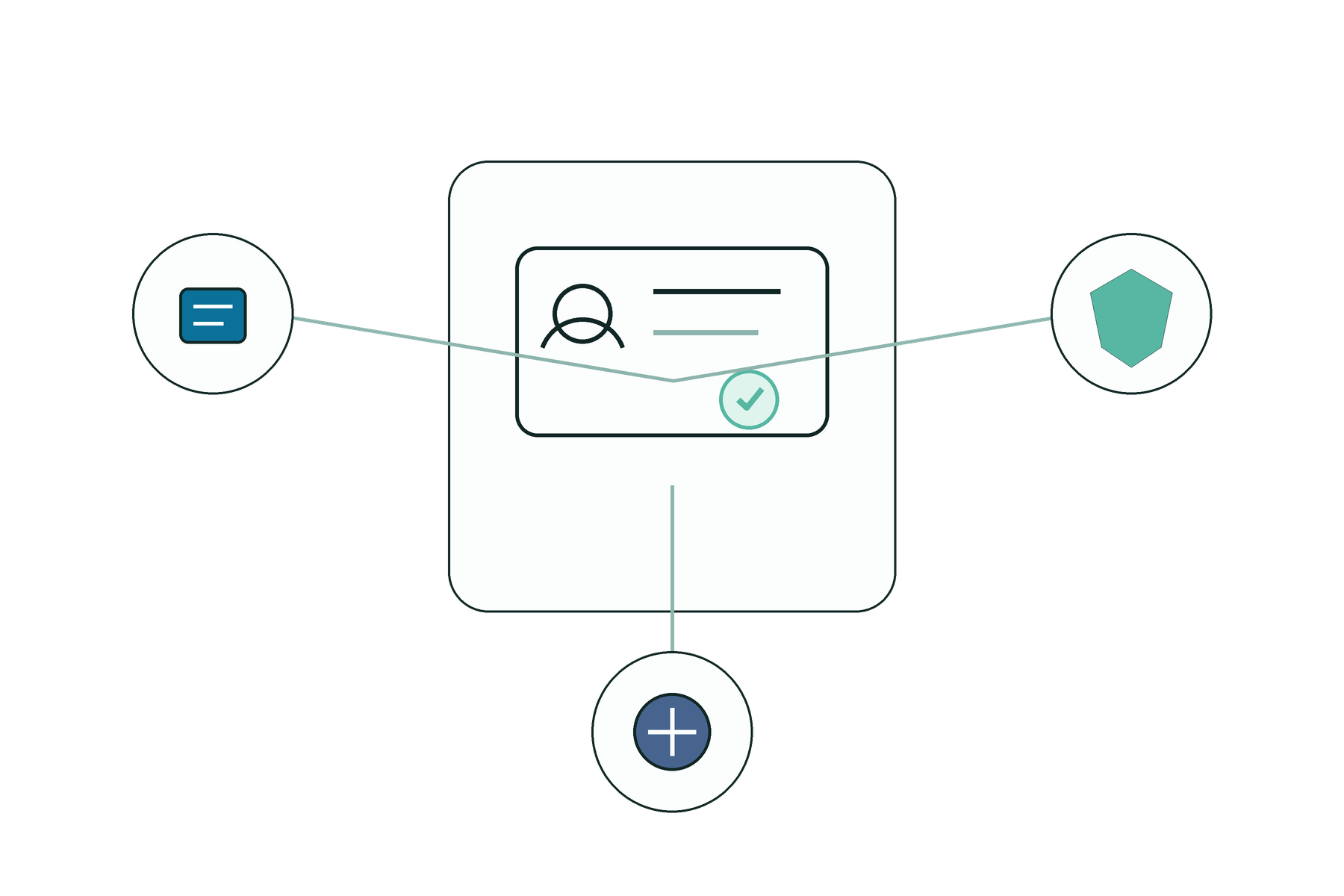
Identity established once, at the strength the first use required, stored as a reusable credential.
A later relationship presents it instead of repeating document capture.
Validity is tracked against the source document's own expiry, so a reuse request against an expired document falls back to establishing identity again rather than silently passing.
Coverage.
Built on the identification routes in KYC: document, data, or an identity the person already holds. Reuse is only as strong as whichever of those established it.
Reusing an identity past its source document's validity carries forward a check that is no longer true, which is a worse position than asking again.
Reusing an identity past its source document's validity carries forward a check that is no longer true, which is a worse position than asking again.
Built to be configured, not locked in.
Which relying parties can request reuse, and how fresh the underlying check has to be, set per integration.
Two audiences.
Reuse only pays off if the original check is still trustworthy at the moment it is reused.
The original evidence behind it, not just a yes.
Why us.
Reuse is built on the same identification routes rather than a separate, lighter one, because reuse is only worth having if the original check was worth trusting.