A UBO declaration is one document, and the company wrote it about itself.
Self-reported ownership is the easiest fact in a KYB file to get wrong, by accident or on purpose, and it is also the one with personal liability attached when it is wrong.
Not "do you have ownership data".
Not "do you have ownership data". Everyone claims that. It is how many layers deep does the resolution go before it gives up and hands the gap back to the customer as a form.
How it works.
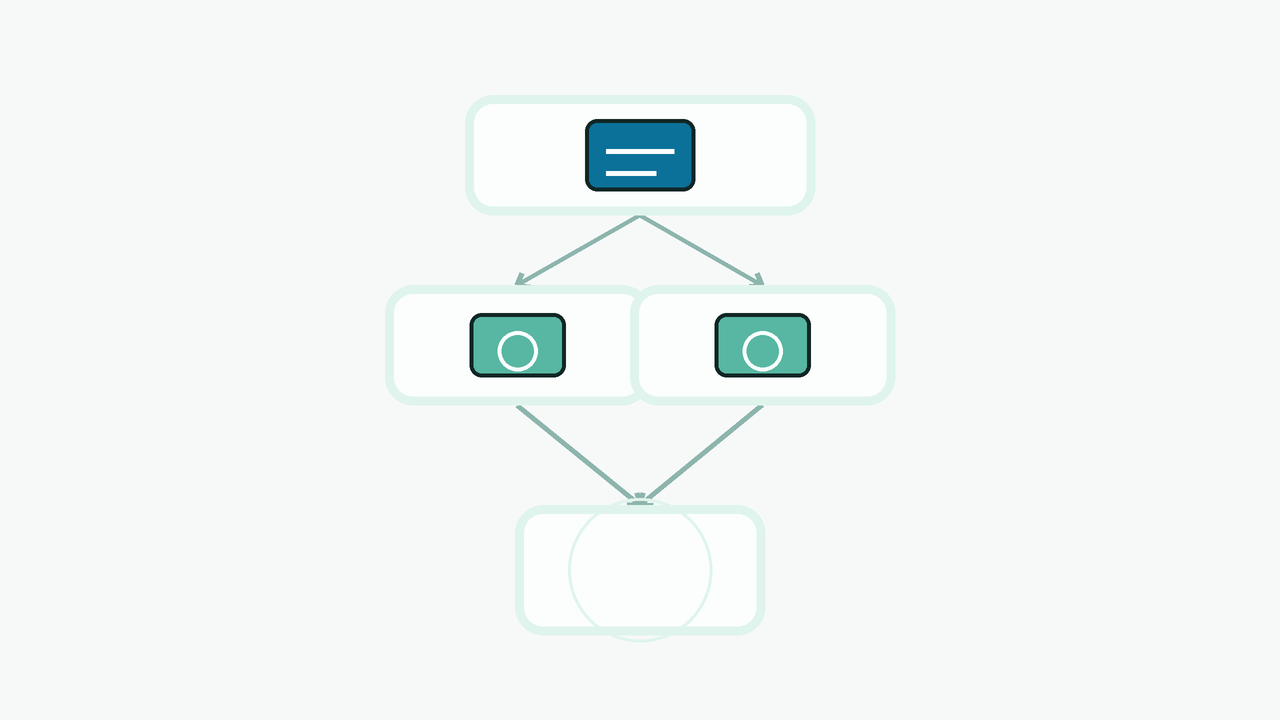
Ownership resolved from register data through holding layers, recursively, until natural persons are reached.
Percentage and control thresholds applied per jurisdiction's own rule, because "who counts as a beneficial owner" is not the same number everywhere.
Where a chain breaks, a nominee structure, a foreign entity with no public register, that break is flagged rather than silently stopping at the last company found.
Coverage.
Drawn from the same register network as company data: 200+ registers. Depth of resolution varies by what each register discloses.
A missed UBO is the one KYB finding that follows the individual who signed off on it, not just the institution.
A missed UBO is the one KYB finding that follows the individual who signed off on it, not just the institution.
Built to be configured, not locked in.
Ownership and control thresholds set per regulation, per market, and re-applied automatically when a jurisdiction's rule changes.
Two audiences.
A missed beneficial owner is the finding that follows the person who signed off, not just the institution.
The chain visualised, with the point where it broke marked if it did.
Why us.
Resolved from the same register access already used for company data, so it is one integration answering both questions rather than a UBO product bolted onto a company-data product.